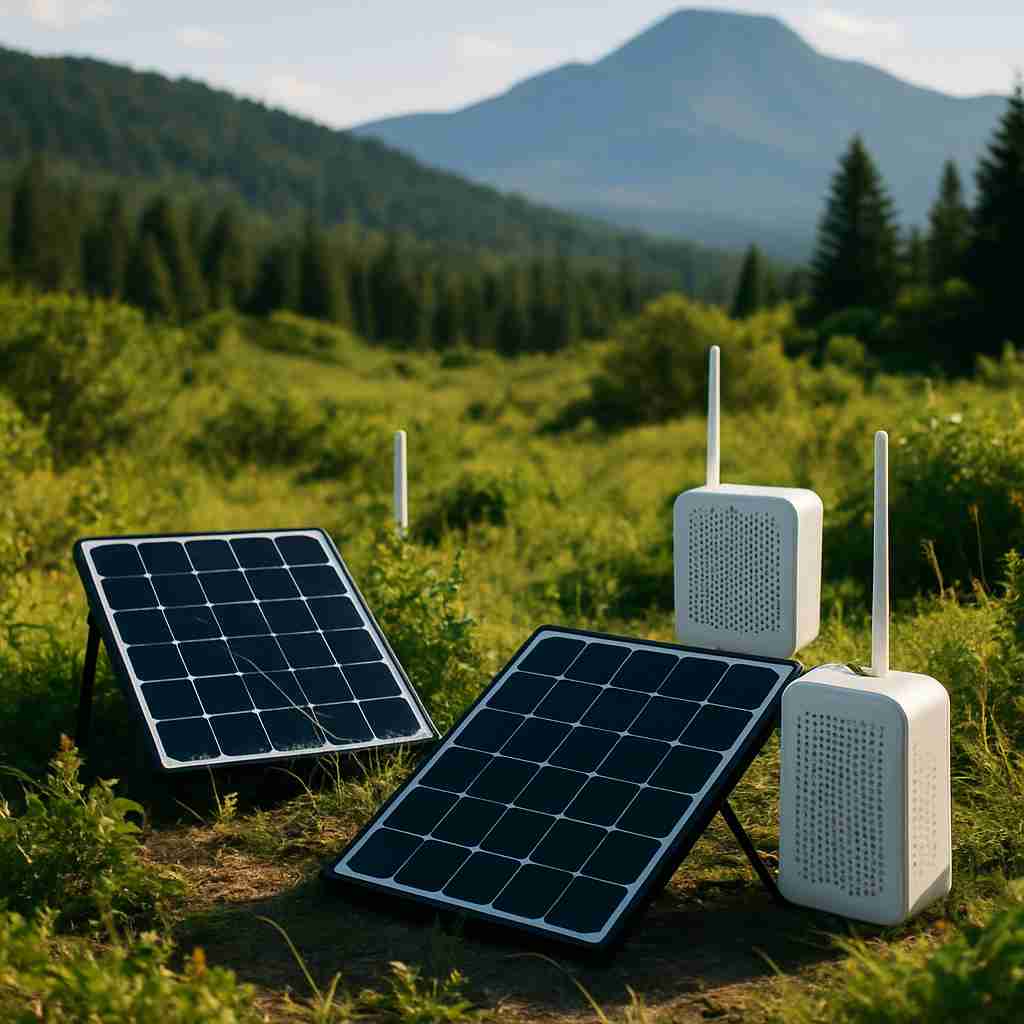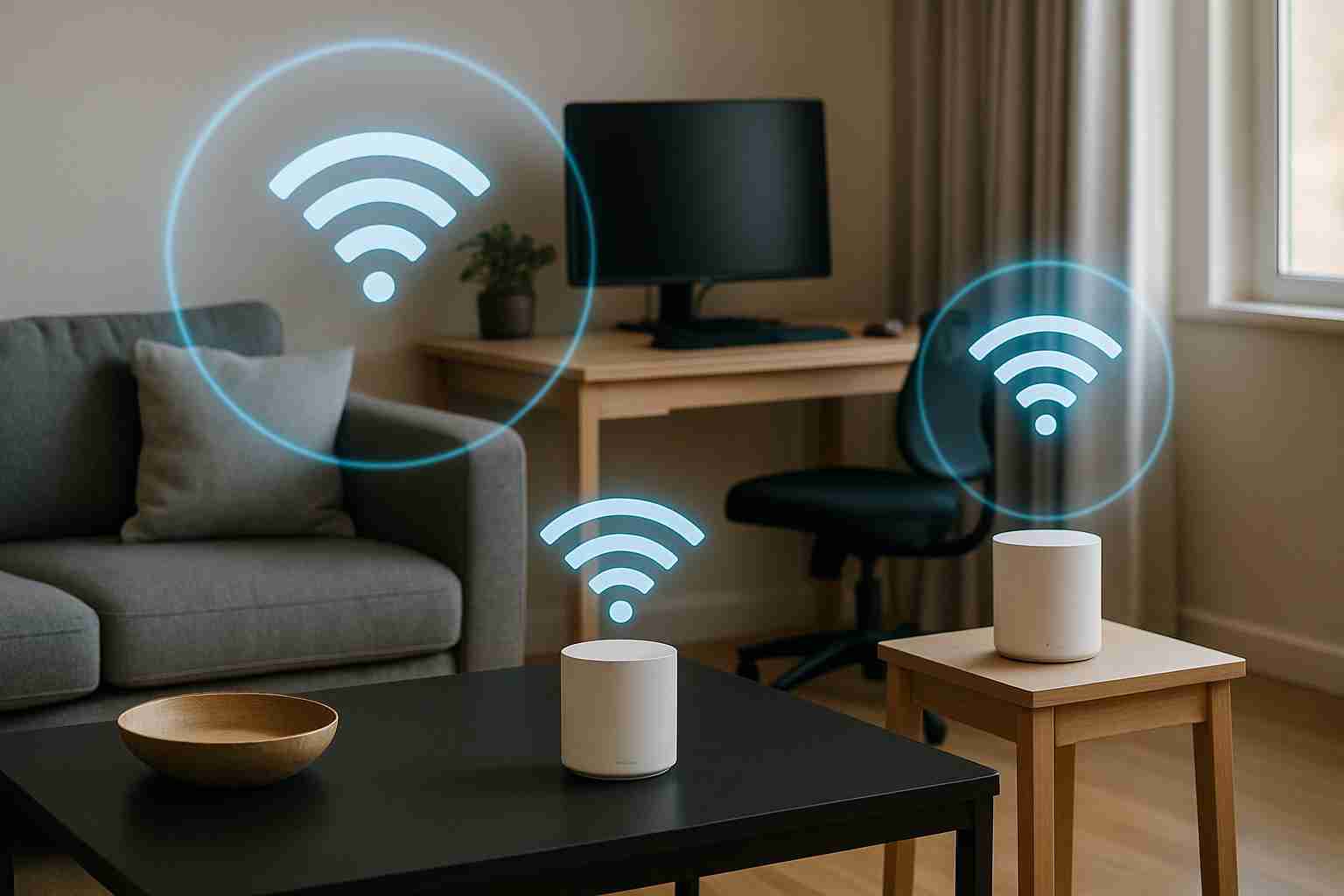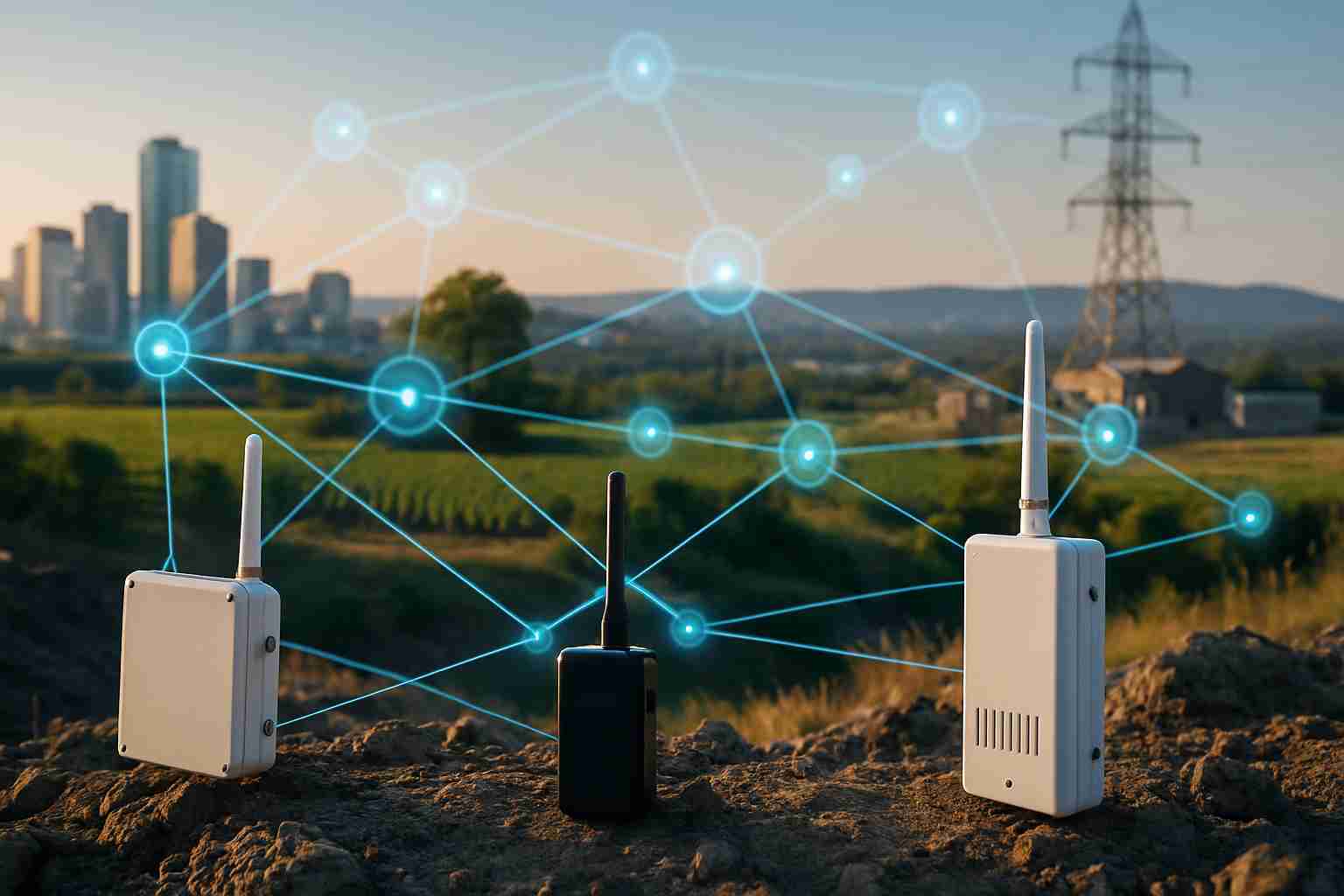
Decentralized communication infrastructures have become essential in the quest for sturdy and durable communication solutions, with LoRa mesh networking at the forefront of autonomous communication technology for off-grid scenarios. By eliminating the need for conventional infrastructure, these cutting-edge innovations aim to transform our perspective on connectivity, providing dependable, extended-range energy-efficient communication for IoT applications.
Understanding LoRa and Its Mesh Networking Capabilities
LoRa (Long Range) technology is distinguished by its exceptional capacity to deliver extended distance energy-efficient communication while keeping power consumption minimal, making it perfect for IoT applications. Functioning as the physical layer for LoRaWAN, it fine-tunes wireless communication for devices that transmit data sporadically across vast regions. This power efficiency allows LoRa devices to operate for several years on a single battery, a vital benefit for sensor-based environmental monitoring in agriculture, earth observation technology, and smart urban infrastructure.
Within mesh networks, LoRa excels by supporting distributed communication systems, altering the way devices interact without the need for centralized infrastructure. By employing the key benefits of spread spectrum modulation, LoRa successfully minimizes interference and enhances coverage, crucial aspects for remote low-consumption communication environments. Thus, it proves highly effective in creating dependable networks in isolated or underserved locations where conventional telecoms face obstacles.
Devices utilizing LoRa mesh network devices leverage these advantages to provide resilient IoT connectivity in dynamic and demanding settings. For those in search of sustainable communication technology, LoRa is more than mere innovation—it’s an entryway to connectivity in areas previously out of reach, offering powerful tools for seamless, distributed wireless networking. As LoRa continues to evolve, it will unlock new possibilities for off-grid connectivity solutions, harnessing its distinctive strengths.
The Role of MeshCore Protocol in Decentralized Networks
LoRa mesh networking devices play a crucial role in supporting robust standalone communication systems. Acting as the foundation of this distributed communication system, the MeshCore protocol enables data to flow effortlessly across numerous nodes. As an open-source framework, it prioritizes autonomy, allowing devices to send messages across extensive distances without dependence on traditional infrastructure. This peer-to-peer communication network not only ensures continuous interaction in isolated regions but also boosts network dependability through its autonomous repair mesh networks capabilities. When a node malfunctions, the MeshCore protocol promptly reroutes data to maintain service. Such fault-tolerant IoT networking is essential for scenarios where network interruption is unacceptable, such as in emergency response operations. Unlike legacy networks reliant on centralized management, LoRa mesh network technology combined with the MeshCore protocol empowers each device to operate independently, enhancing both accessibility and scalability. Over time, developers have integrated features like dynamic routing in LoRa communication and energy-efficient IoT mesh networking protocols, aligning the solution with the evolving needs of modern connectivity. This progression underlines its capacity to uphold connections in demanding conditions, bridging communication divides and presenting a strong alternative to conventional frameworks. These advancements in communication platforms establish LoRa networks as a fundamental pillar for future autonomous IoT connectivity.
Advantages of Off-Grid Communication in Remote Areas
In locations where dependable internet and cellular signals are missing, LoRa mesh networking has revolutionized off-grid communication. This innovation plays a crucial role in rural or distant regions by supporting emergency responses, boosting agriculture, and improving logistics. When emergencies arise, mesh networks’ ability to maintain communication where conventional networks break down can be lifesaving. By smartly rerouting around interruptions, they offer uninterrupted connectivity, guaranteeing that critical information is delivered promptly.
In the agricultural sector, LoRa mesh networking allows farmers to link sensors scattered across remote fields, providing real-time insights and enhancing resource management efficiency. This advancement helps optimize crop yields and manage inputs proactively. Furthermore, these networks’ flexibility benefits logistics by tracking assets over broad areas without relying on centralized hubs, ensuring constant communication throughout supply chains.
The autonomous repair mesh networks possess self-healing features that allow them to adjust and keep functioning when nodes are added or fail, securing dependable communication pathways in isolated settings. Their resilience makes them essential for off-grid scenarios, redefining how data is transmitted across expansive and challenging landscapes.
Leveraging Long-Range IoT for Enhanced Connectivity
Devices utilizing LoRa mesh networking have emerged as fundamental tools for boosting connectivity across extensive regions. These long-distance IoT connectivity solutions, in particular, break the boundaries of conventional networks, overcoming the constraints of urban infrastructures. With its extended distance energy-efficient communication features, LoRaWAN supports implementations in smart urban environments, agriculture, and industrial oversight. For example, in smart cities, LoRa-enabled devices allow instant data exchange among multiple sensors, helping to streamline traffic control and optimize power consumption. Meanwhile, in agriculture, connected agricultural sensors assist farmers in tracking soil moisture and plant health, which leads to conserving water resources and enhancing crop production.
Moreover, within industrial monitoring, these systems guarantee smooth equipment functioning over vast premises without the need for complex wiring. Their strength lies in the ability to expand IoT coverage over wide areas while keeping energy usage minimal. This results in gadgets running for years on just one battery, substantially cutting down upkeep expenses. By emphasizing connectivity, LoRa mesh networking makes deploying autonomous IoT systems in isolated locations practical, transforming how connectivity is perceived and used. Such solutions operate efficiently even in challenging landscapes, ensuring effective data gathering and processing without reliance on the main power grid.
Low-Power Mesh Radios and Their Future Prospects
At the cutting edge of advancing sustainable communication technology, low-power mesh radios play a vital role. Especially when conventional infrastructure struggles, these compact gadgets are essential for building efficient mesh networks in remote IoT technologies. Demonstrating the synergy between low-power innovation and the need for extended distance energy-efficient communication, LoRa mesh network devices serve as prime examples. As technology progresses, these radios are being continuously improved to boost battery life span and extend connectivity ranges, reaching even the most isolated locations. Research efforts focus heavily on seamless integration, optimizing network protocols with an emphasis on energy conservation and dependable performance.
Low-Power Mesh Radios and Their Future Prospects
Looking ahead, these devices are poised to advance alongside innovations in battery materials designed to promote energy savings. Their applications span a wide spectrum — from industrial environments to consumer markets, delivering trustworthy communication solutions in varied conditions. However, hurdles such as mesh network scalability challenges persist. Deploying this technology involves navigating regulatory landscapes and ensuring compatibility across diverse devices. Still, the transformative potential these radios hold for reshaping communication frameworks is significant, promising connectivity that remains both resilient and sustainable as development continues.
Conclusions
The MeshCore protocol along with LoRa wireless mesh network truly represent the next generation of distributed communication systems, delivering efficient and durable standalone IoT platforms. These innovations leverage extended-range IoT networking and energy-saving mesh network solutions to maintain stable IoT communication where conventional networks often fail. As these technologies advance, they hold great potential to close connectivity gaps, fostering progress across both remote and metropolitan environments.