In today’s highly connected world, having dependable and extensive communication networks is vital. Technologies ranging from long-distance wireless communication to submarine communication cables facilitate the smooth transmission of data over enormous expanses. This article delves into these essential infrastructures, emphasizing their functions, technologies, and interrelations that guarantee uninterrupted worldwide connection.
Understanding Long-Range Wireless Communication
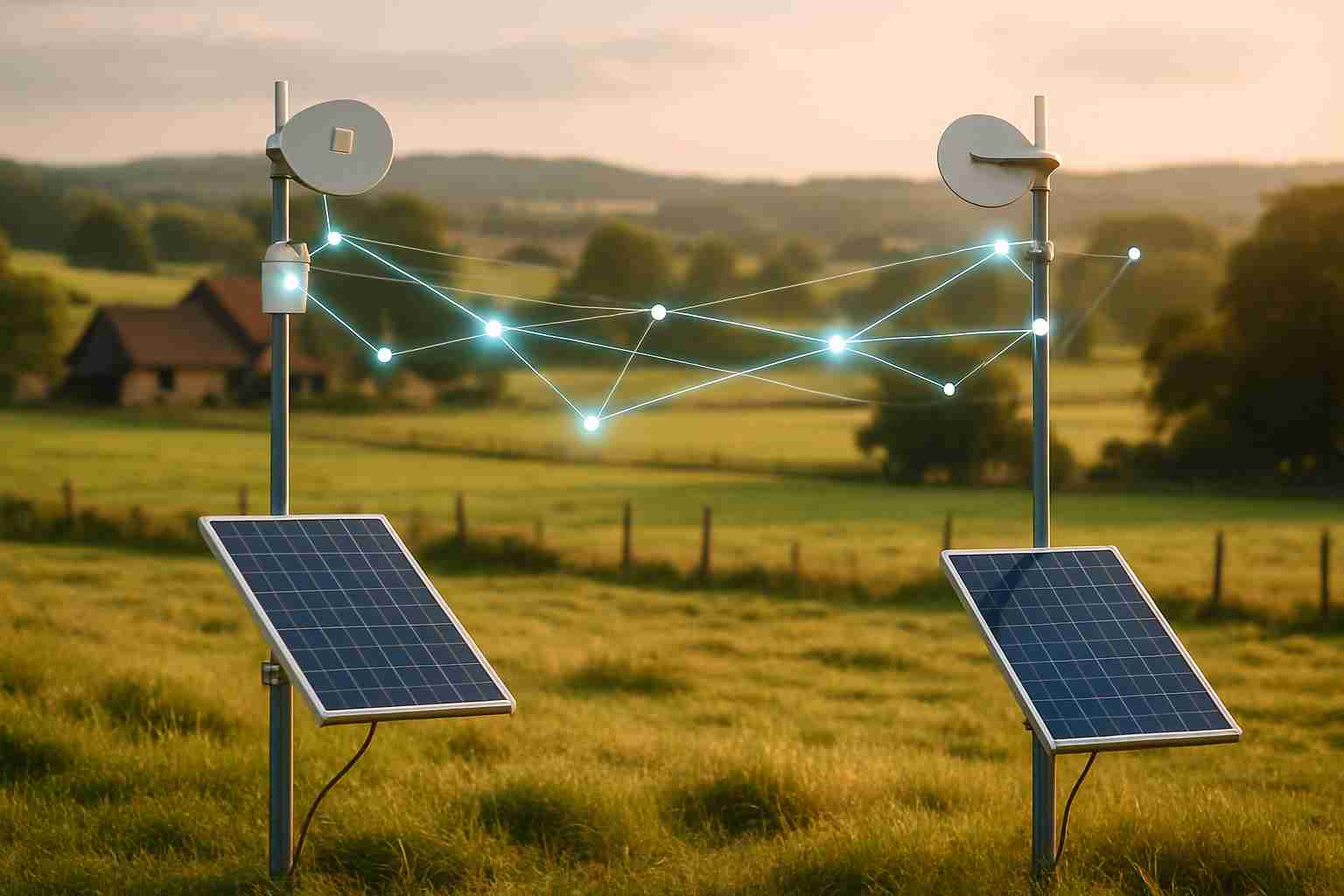
Long-range communication systems enable data exchange over great distances without needing physical connections, serving a crucial role in today’s interconnected environment. Technologies such as Amazon Sidewalk, which integrates Bluetooth with LoRa wireless communication, highlight the flexibility of these frameworks. They support reliable communication infrastructures within urban IoT network solutions and intelligent urban connectivity systems, allowing devices to share data efficiently across extended distances. This wireless strategy provides an elegant alternative when conventional wiring is unfeasible.
The benefits are numerous; among the most significant are simplified deployment and scalability. Within smart city networks, this leads to better traffic control, smooth sensor networking, and enhanced responses from emergency services. When it comes to the Internet of Things, it fills the gaps in logistics and agricultural monitoring efficiently.
Still, issues such as data security and signal interference must be managed. Protection is enhanced through wireless communication encryption and authentication protocols, safeguarding information from unauthorized interception. Meanwhile, interference concerns are addressed using advanced signal processing and smart frequency hopping techniques.
Long-range communication stands as a promising avenue to broaden connectivity, boosting the performance and reach of modern networks while tackling the challenges specific to wireless information transfer.
Low-Power Wide-Area Networks (LPWAN): Enabling IoT
Low-Power Wide-Area Networks (LPWAN) technologies like Sigfox and LoRaWAN have become essential catalysts in the field of remote wireless connectivity solutions for IoT devices, delivering effective communication over great distances while conserving energy. While Sigfox uses an ultra-narrowband approach that supports low bit-rate data communication suitable for transmitting small snippets of information, it is especially suited for battery-operated IoT devices. Conversely, LoRaWAN employs a chirp-based spread spectrum method to sustain connections with minimal interference, greatly broadening the signal’s reach.
These LPWAN solutions shine in sectors such as precision agriculture, permitting farmers to remotely oversee their fields and gear. In the realm of logistics, they provide reliable asset tracking across vast routes, and for environmental monitoring, they supply real-time insights on air and water conditions. However, challenges persist, particularly in regards to LPWAN connectivity range and the LPWAN system integration between various standards. These obstacles emphasize the continuous demand for interoperable solutions that facilitate smooth interaction across different LPWAN protocols, thus ensuring a sturdy foundation for long-distance wireless communication within the IoT landscape.
Satellite Communication: Bridging the Gaps
Revolutionizing connectivity, satellite communication plays a vital role where ground-based infrastructure is limited. These engineering wonders operate mainly in geostationary and low Earth orbits. Satellites in geostationary orbit, circling roughly 35,786 kilometers above Earth, stay fixed relative to the planet, making them perfect for meteorological monitoring and television broadcasts. On the other hand, satellites in low Earth orbit, situated between 180 and 2,000 kilometers from Earth, excel in applications demanding reduced latency, which benefits real-time internet services and advanced military communications.
The scope of satellite technology is vast, encompassing global television transmission and broadband internet access in isolated regions. Their significance in defense is equally critical, providing secure communication links crucial for contemporary military tactics. With technological advancements, satellites are evolving to deliver greater bandwidth and lower latency. Examples of such innovations include high-bandwidth satellites and adaptive antenna arrays.
Nonetheless, challenges persist due to space debris and atmospheric disturbances. The increasing count of satellites raises collision risks, requiring constant orbital debris mitigation and monitoring. Signal disruptions caused by the atmosphere demand ongoing improvements in satellite design and technology to guarantee dependable operation in a dynamic environment.
Fiber Optic Cables: The Backbone of High-Speed Data Transfer
At the core of rapid data communication lie fiber optic cables, facilitating swift and dependable exchanges over extensive distances. These cables transmit light signals through flexible, transparent fibers crafted from glass or plastic. Central to their high performance is this design, as light signals experience significantly less attenuation than electrical currents in copper wiring. The materials comprising the core and cladding in fiber optics are crucial to minimizing signal degradation, enabling data to traverse continents rapidly.
The benefits of fiber optic technology are considerable. They provide vast bandwidth capacities, allowing tremendous volumes of data to flow without congestion. Their near-instantaneous data transfer, thanks to low latency, makes them perfect for real-time operations. Additionally, fiber optics resist electromagnetic interference unlike conventional cables, ensuring data remains consistent and intact.
Fiber optic technology for 5G infrastructure is essential in modern networks. They serve as the backbone supporting the accelerated data flow demanded by today’s applications. Yet, deploying fiber optic cables requires specialized tools and ongoing maintenance to maintain optimal functionality. Even with these complexities, their contribution to long-range communication and network progression is unmatched, setting the stage for emerging technologies.
Undersea Cables: Connecting Continents
The history of submarine communication cables highlights human creativity and the unwavering drive for worldwide connectivity. Evolving from basic telegraph wires in the 1800s, these underwater data cables now serve as advanced fiber optic conduits crucial for today’s long-range communication. Although the initial telegraph lines set the stage, it is the introduction of fiber optic technology that truly transformed their bandwidth and dependability.
Engineered with precision, modern oceanic communication lines feature multiple protective layers crafted to endure the ocean’s most severe environments. Using trenching methods, they are carefully installed beneath the seabed, safeguarding them from natural phenomena like earthquakes and human activities such as fishing and anchoring. Technologies like repeaters maintain signal integrity over enormous distances, enabling the extensive data transmission essential to the global economy today.
By underpinning international commerce, finance, and digital markets, these cables form the backbone of the international telecommunications network that facilitates long-range communication. Serving as vital channels of information flow, they link continents, support digital exchanges, and allow instantaneous collaboration worldwide, underscoring their crucial importance in contemporary society.
Conclusions
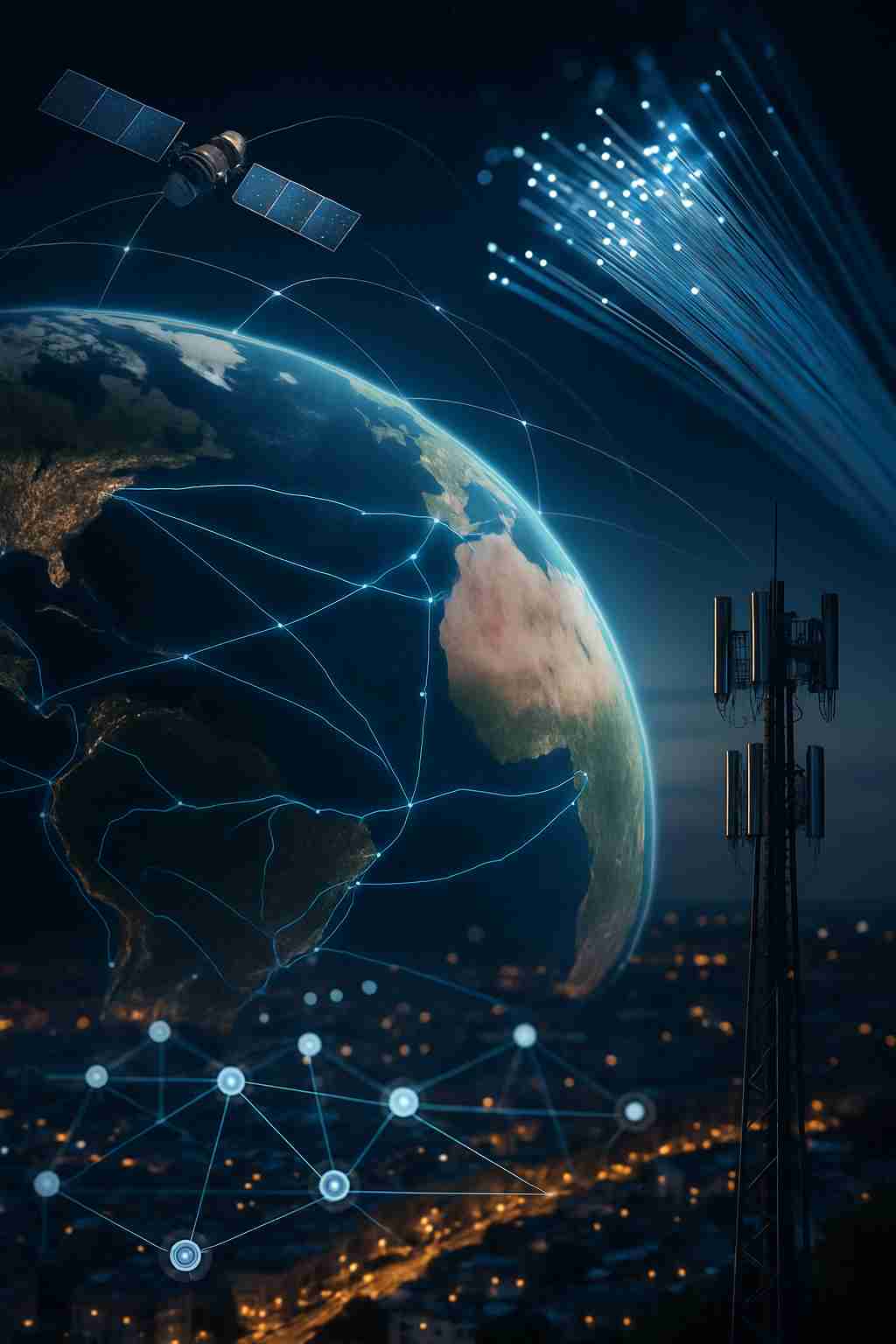
As reliance on digital technologies grows, the importance of sturdy communication frameworks such as long-distance wireless communication, LPWAN, satellite systems, fiber optics, and submarine fiber optic cables becomes increasingly evident. Together, these technologies facilitate uninterrupted worldwide connection, bolstering both innovation and economic development. To safeguard connectivity against rising demands and environmental pressures, comprehending and investing in this international communication network is essential for long-term success.