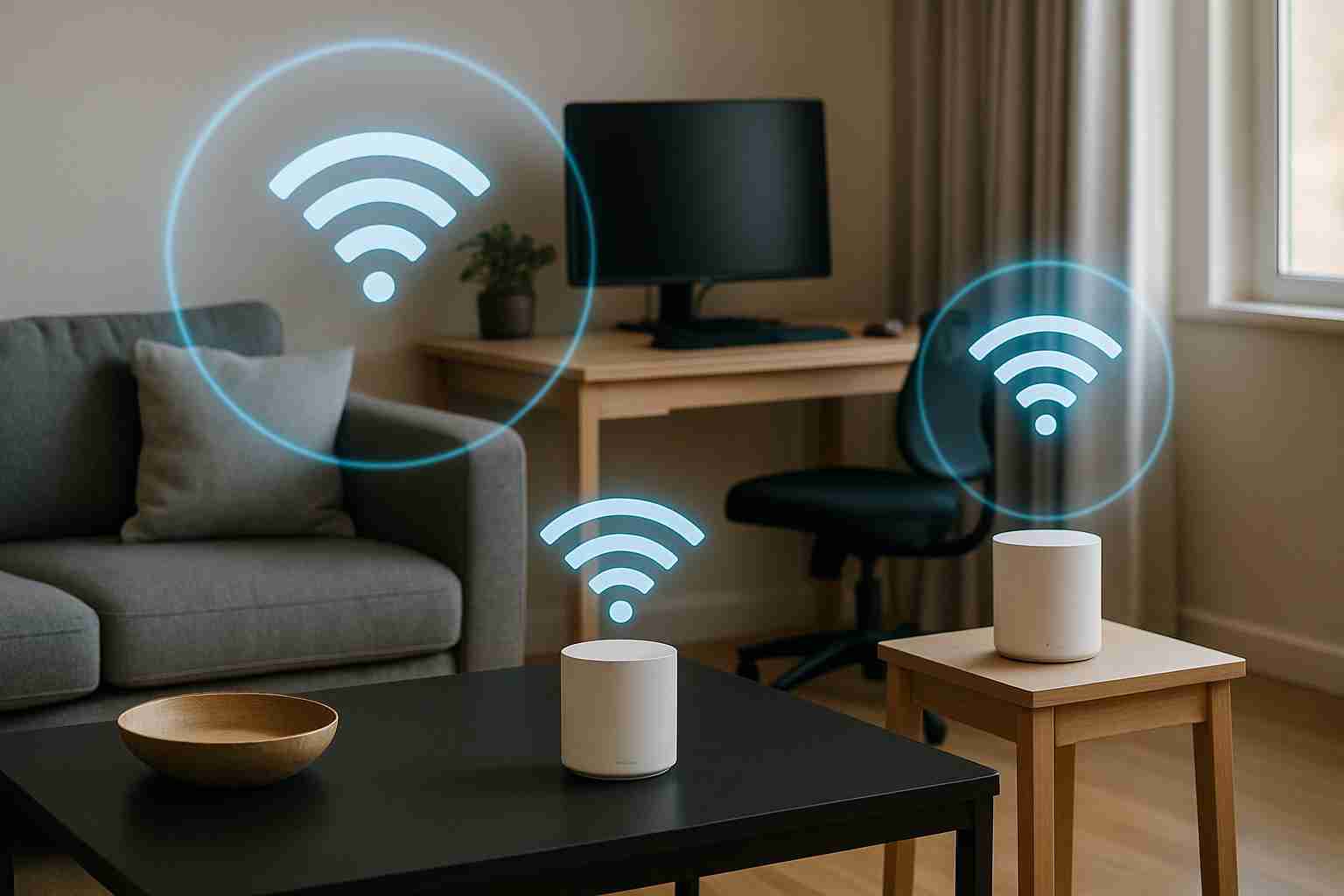
By creating stable, scalable, and resilient networks, mesh networking is transforming how devices connect and communicate. This article delves into mesh network technology, highlighting its mesh network advantages, applications in mobile mesh communication, implementations in wireless mesh technology, and the mesh networking protocols that drive it. Learn how this technology improves connectivity across diverse settings.
What is Mesh Network Technology?
Mesh network technology is based on the concept of nodes communicating directly with one another, forming a decentralized web of interconnected devices. Unlike traditional networks that depend on a single central hub, this design removes the necessity for a sole point of contact. Every node in a mesh network serves as both a sender and receiver, promoting intelligent data transmission in mesh architectures. This mechanism guarantees that data follows the most effective path to reach its target, improving mesh network reliability and coverage, even when certain nodes malfunction or drop out.
One major mesh networking benefit is its self-repairing nature; if a node becomes unavailable, the network automatically redirects data through other routes, reducing interruptions. Such adaptability proves especially useful in wireless mesh networking, which is often deployed in urban and rural environments where physical barriers can impact connection quality.
In wired mesh networking configuration, these networks provide sturdy setups for home or office LANs, delivering wide reach and fast speeds. For instance, Google’s Nest Wifi and Netgear Orbi demonstrate how nodes establish robust domestic mesh wireless systems with seamless coverage that eliminates dead zones, enhancing the overall user experience. The Mesh Network Technology for mobile communication leverages these concepts, adapting them for continuous device interaction and communication without relying on fixed infrastructure.
Mesh Networks and Mobile Communication
Mobile mesh networking has transformed the way devices connect by eliminating the need for traditional infrastructure, revolutionizing mobile communication. Instead of the usual centralized nodes and base stations that conventional mobile networks depend on, these networks operate in a decentralized manner. Every device serves as a node, effortlessly linking and forwarding data through its neighbors. This distributed approach allows communication even where infrastructure is missing or compromised.
The innovation found in Mesh Network Technology for mobile communication significantly bolsters mesh network robustness; should a node fail, data automatically reroutes through other functioning nodes, maintaining seamless connectivity. This adaptability is especially crucial in disaster zones or isolated areas where typical communication systems break down. Nonetheless, challenges remain, such as possible interference and network congestion in highly populated urban settings that can affect overall efficiency.
Practical uses of mobile mesh networking span tactical communication for defense-grade mesh networking and emergency scenarios where maintaining contact is critical despite damaged infrastructure. Devices like Mesh Network Technology for mobile communication exemplify the impact of mesh network implementations, driving innovation beyond the limits of traditional communication.
Advantages of Mesh Networking
Mesh networking brings remarkable advantages when compared to classic network topologies, revolutionizing communication landscapes, particularly in the realm of Mesh Network Technology for mobile communication. Scalability stands out as one of the chief advantages. Unlike traditional networks that often face challenges as they grow, modular network infrastructures allow mesh systems to expand effortlessly by adding new nodes, all while preserving strong performance without needing a major infrastructure overhaul.
Another key strength is mesh network robustness. Autonomous mesh networks boast self-healing capabilities that reroute data automatically through alternate nodes in case of failure. This ensures consistent connectivity, making these systems perfect for smart city mesh communication networks and remote locations where uninterrupted, stable service is essential.
Deployment is also simplified. While cabled mesh network installation demands thorough wiring and planning, wireless mesh networking reduces complexity and installation times by connecting nodes wirelessly. This streamlined setup translates into cost savings by lowering labor and material costs.
Furthermore, Mesh Network Technology for mobile communication offers adaptable wireless signal coverage that adjusts dynamically to environmental factors. This flexibility proves invaluable in urban areas or challenging terrains where obstacles might weaken signals. By autonomously optimizing data paths, mesh network wireless solutions provide efficient and reliable communication, becoming indispensable as our world grows increasingly interconnected.
Diving into Wireless Mesh Networks
Wireless mesh networking (WMNs) transform mobile communication by creating durable, autonomous mesh networks. These systems depend on linked nodes, each functioning as a router, to keep data moving smoothly over large distances. Since the design of WMNs is decentralized, the network remains operational by rerouting data through other nodes even if one fails, guaranteeing consistent connectivity.
The elements making up WMNs include routers, gateways, and client nodes, all working together to build a network without a single failure point, thereby boosting mesh network robustness. WMNs can spread coverage well beyond typical limits, reaching locations where standard Internet Service Providers often face challenges. This makes them perfect alternatives, especially in isolated or underserved regions.
Community wireless mesh systems, such as those run by local groups, demonstrate the power of WMNs in closing the digital gap. These grassroots projects give communities control over their internet access, delivering affordable broadband solutions for rural or economically challenged areas. By improving communication for those in greatest need, Mesh Network Technology for mobile communication stands out as a game-changing solution that fosters wider digital inclusion.
Protocols Powering Mesh Networks
Advanced mesh network communication standards such as IEEE 802.11s and Thread form the backbone of mesh network technology, enabling smooth and effective communication. These wireless mesh protocols are essential for building efficient, adaptable, and secure mesh wireless systems. Extending traditional Wi-Fi capabilities, IEEE 802.11s wireless mesh technology allows devices to connect directly, creating a resilient, self-managing mesh network that reroutes data automatically if a link is disrupted. Such adaptability proves crucial in regions with patchy infrastructure, helping both urban and rural communities sustain strong connectivity.
In the sphere of IoT and home automation, Thread stands out as a premier Thread communication protocol in IoT, prioritizing energy-saving mesh networks and secure links — features that make it perfect for smart home devices. By integrating IPv6 support within a mesh architecture, Thread mesh protocol for Internet of Things guarantees communication among connected devices across distances without compromising on battery efficiency.
Each mesh networking standard targets specific sectors: IEEE 802.11s wireless mesh technology plays a vital role in urban planning and public safety, while Thread is favored in consumer electronics and intelligent building environments. Both protocols greatly contribute to enhancing Mesh Network Technology for mobile communication, showcasing their strength in tackling connectivity obstacles and opening the door to innovative mesh networking applications across various industries.
Conclusions
Providing scalable and resilient connectivity across various settings, mesh networking brings transformative advantages to the table. By grasping how mesh wireless communication technology operates and its numerous advantages, individuals and organizations alike can harness its potential to improve communication. As mesh networking routing algorithms and applications continue to develop, these networks are set to assume an even more significant role in the evolution of connectivity.