In today’s world, where the Internet of Things reshapes our everyday routine, ensuring dependable connectivity in tough conditions is crucial. Thanks to breakthroughs such as LoRa mesh networks and LoRaWAN, energy-efficient wide-area networks enable devices with low power consumption to communicate over remarkable distances and with great robustness, even in isolated regions. This shift is revolutionizing applications from smart city connectivity to adventures in remote wilderness.
The Mechanics of Mesh Networking
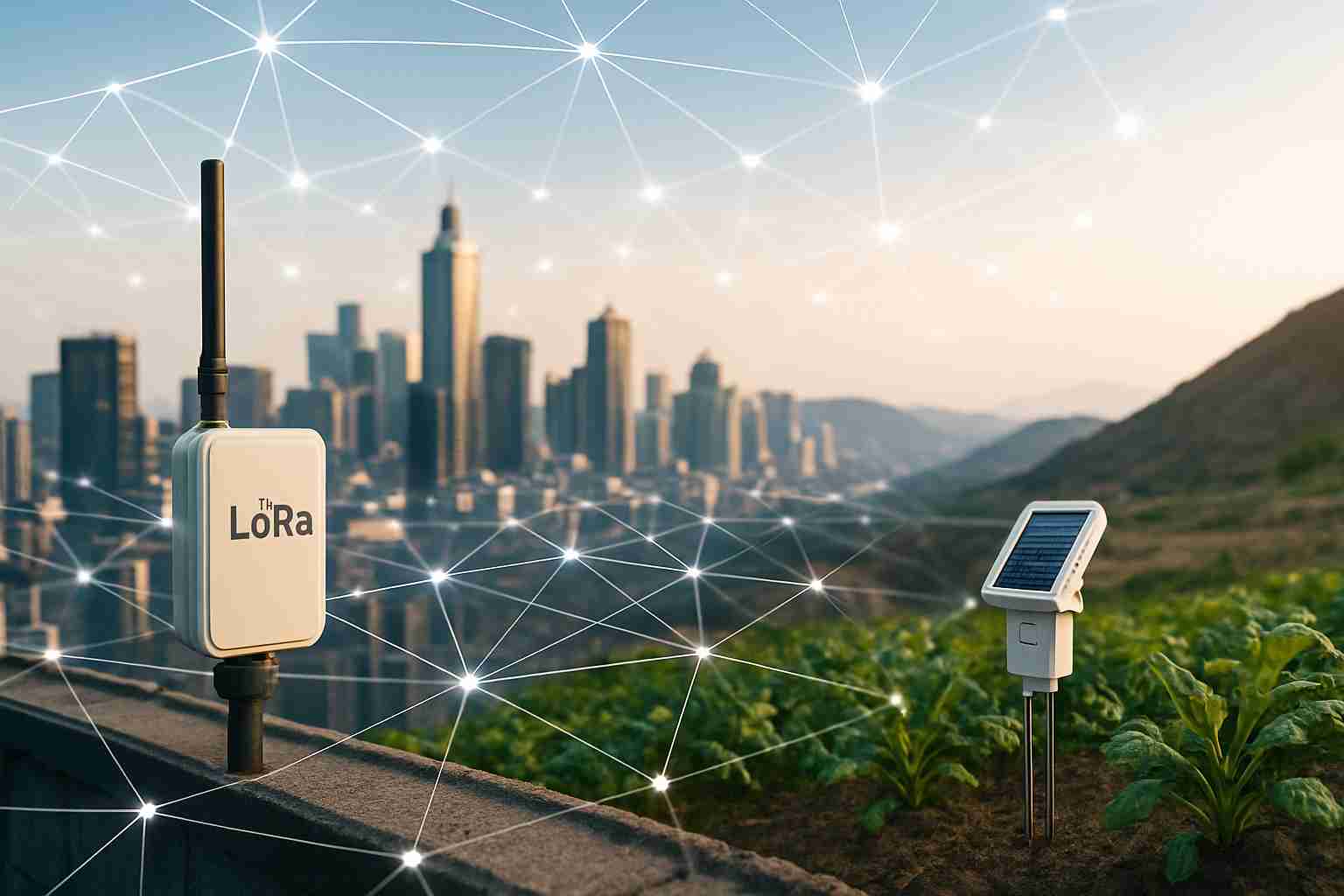
Mesh networking represents a groundbreaking method in the field of connectivity, providing a decentralized substitute for conventional networking structures. Instead of relying on hierarchical networks that center around main hubs or routers, each node within a mesh network autonomously organizes and interacts directly with neighboring nodes. This lack of dependence on a single failure point enhances both the dependability and durability of the network framework. Within a LoRa mesh network, data can be rerouted effortlessly when a node malfunctions or is blocked, demonstrating the network’s self-repairing communication capabilities.
The redundancy inherent in mesh topology guarantees uninterrupted data transmission despite individual link failures. This attribute, combined with its ability to improve communication in wireless or hybrid environments, renders it crucial for autonomous communication networks. For distributed IoT architectures spanning vast and often remote locations, a LoRa mesh network ensures reliable and efficient connectivity. By independently directing data routes, mesh networks play an essential role in the stability and performance required in extensive IoT ecosystems, supporting robust standalone communication solutions.
Expanding IoT Connectivity with LoRa Mesh Networks
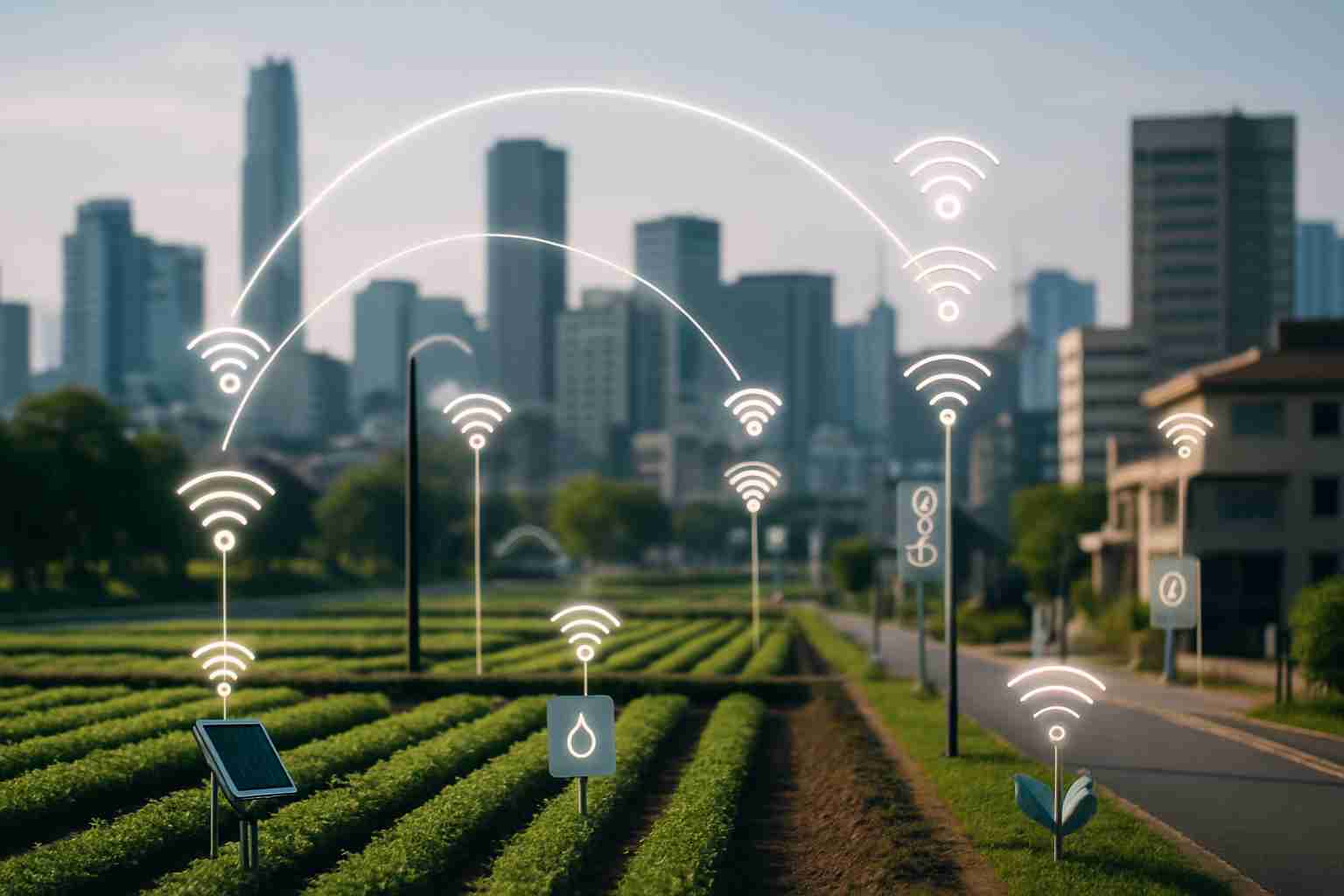
The adoption of LoRa mesh networks within IoT environments carries significant transformative promise, especially for isolated area networking. By enabling every node to interact efficiently, these networks build a sturdy web of data exchange that enhances connectivity. Utilizing LoRa’s energy-efficient wide-area network capabilities, such mesh networks emerge as a model of efficiency, notably in sectors like agriculture and utilities. For example, in vast farmland, smart farming sensors can track soil and crop status, transmitting this information over extensive ranges with minimal upkeep or power consumption. Meanwhile, utilities enjoy uninterrupted communication of maintenance notifications and system statuses throughout expansive infrastructure. The tangible outcome of implementing LoRa mesh networks lies in the improved dependability and performance of IoT devices, which require little servicing. Thanks to the mesh architecture, stability is preserved even if individual nodes fail, an essential feature where conventional networks struggle. These infrastructural improvements highlight the profound role of mesh networking in reshaping autonomous communication networks and industrial connectivity.
Off-Grid Communication Innovations
In scenarios where connectivity is independent of traditional infrastructure, LoRa mesh network technologies stand out as pioneering remote communication systems. For instance, Meshtastic makes use of LoRa’s decentralized wireless networks to offer dependable communication when conventional networks are unavailable. These networks are invaluable in emergency circumstances like natural catastrophes, where infrastructure is damaged, or in remote site network deployment, such as hiking routes or distant expeditions, where standard cellular signals are absent. By creating an autonomous mesh network, they guarantee message delivery, providing users with both reassurance and functional connectivity.
While LoRa mesh network systems bring many advantages, they do face challenges, particularly the necessity for line-of-sight communication. Nonetheless, coverage can be significantly extended by strategically positioning nodes and utilizing repeaters, which helps address these visual line transmission barriers. Their capacity to maintain communication amid disorder not only enhances personal security but also bolsters community resilience, highlighting the remarkable potential of LoRa technology within standalone communication solutions. Appreciating their practical application reveals how connectivity can transform safety and accessibility in demanding environments.
Future Directions in IoT and Mesh Networking
As the digital realm continues to advance, combining LoRa mesh network technology with Internet of Things network services reveals vast potential. These networks seem to be fundamentally linked to the future of IoT, ready to tackle traditional connectivity obstacles, especially within intelligent urban networking and industrial wireless mesh communication. One significant hurdle on the horizon is bandwidth limitation. With the surge in IoT devices, the pressure on spectrum availability grows, pushing the need to create strategies that optimize node communication for scalable connected device integrations.
Looking ahead, key technological improvements like flexible data rate IoT and distributed spectrum communication are essential. They hold the promise of enhancing communication efficiency without overwhelming the spectrum capacity. Likewise, multi-node relay systems will enable the LoRa mesh network to extend its coverage, lessening dependence on unobstructed path communication issues for transmitting data.
To encourage wider innovation and broader adoption, implementing standardized Internet of Things communication standards is crucial. Ensuring interoperability among various vendor platforms will guarantee smooth integration across diverse IoT communication platforms, enhancing user trust and strengthening the durability of deployments. Despite the challenges, the future envisioned here carries tremendous promise for launching advanced, interconnected IoT infrastructures.
Conclusions
LoRa and mesh networking stand as trailblazing advancements in pushing the boundaries of IoT connectivity. These technologies reshape low-energy wide-area network communication, offering resilient solutions for both connected smart city infrastructure and isolated communication platforms. As various sectors adopt these networks, the outlook is promising for improved reliability, efficiency, and connectivity, highlighting the vital contribution of LoRa and LoRaWAN technology advantages in the digital era.