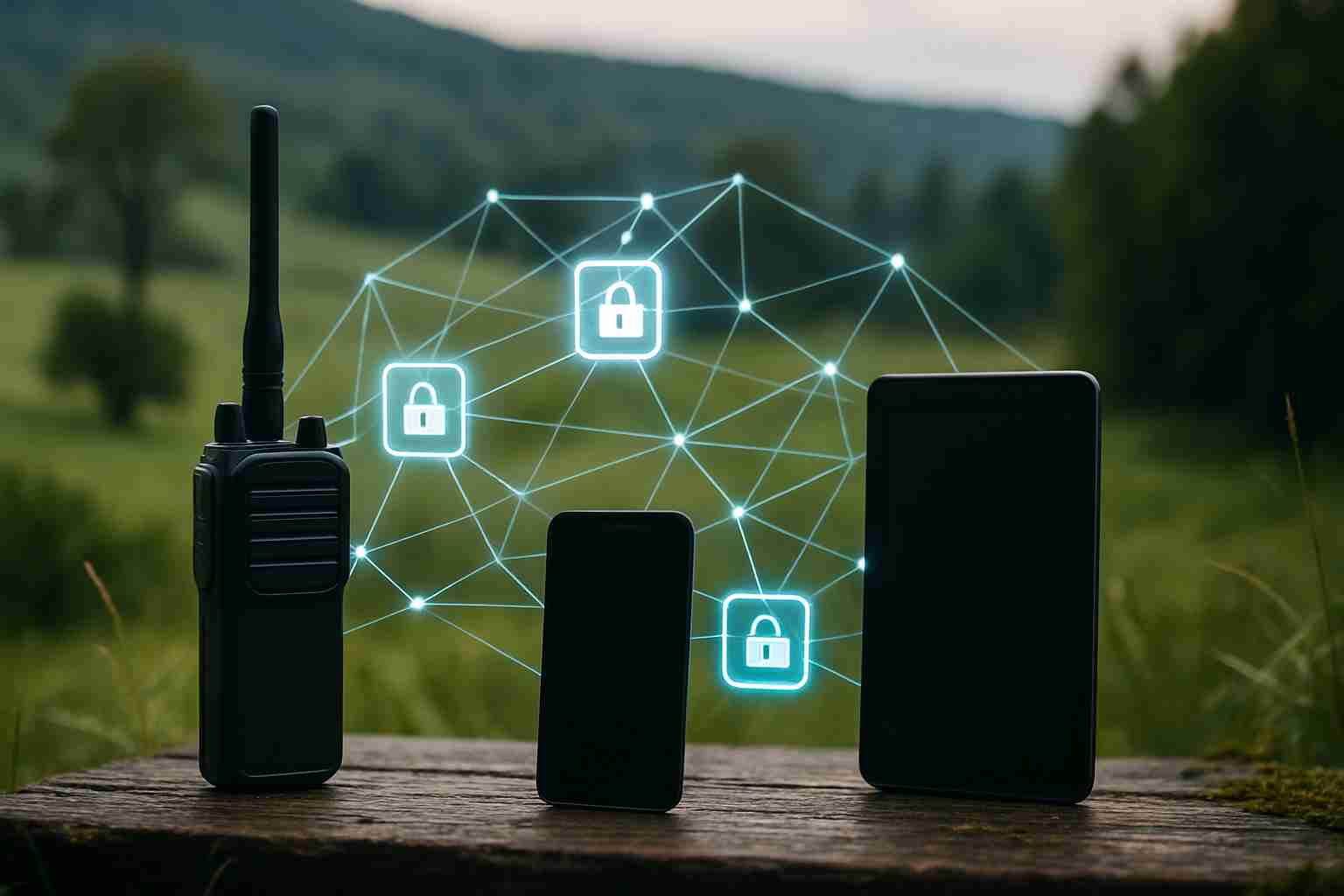
In today’s world of digital interconnection, the importance of having offline secure messaging solutions that do not depend on conventional internet access is growing rapidly. This discussion explores pioneering self-sufficient communication platforms, including distributed mesh networking and encrypted peer-to-peer communication technologies, providing a trustworthy alternative powered by protected encrypted message exchange.
The Importance of Secure Off-Grid Messaging
When Internet access is either unavailable or undesirable, secure off-grid messaging acts as a cornerstone for dependable communication. It enables individuals to protect their privacy by bypassing traditional networks that often suffer from security weaknesses. This communication approach is vital from disaster-stricken areas to isolated regions where Internet infrastructure might be absent. Additionally, secure off-grid messaging provides a sanctuary from centralized monitoring for those who value privacy.
By steering clear of centralized servers, users reduce the risk of hacking, surveillance, and data leaks. Platforms such as Secure Scuttlebutt showcase the promise of off-grid communication as a practical social network substitute, featuring decentralized data storage and transfer. This peer-based method eliminates any single failure point, boosting both security and reliability. In crises, having an autonomous communication strategy ensures continuous coordination when standard networks fail. Therefore, these technologies offer not only connectivity but also freedom and confidence.
The Role of End-to-End Encryption in Communication
As a fundamental element in protecting communication confidentiality and authenticity, end-to-end encryption is key for secure off-grid messaging. It guarantees that messages stay private and intact throughout their passage from sender to recipient. Platforms such as WhatsApp and Wire utilize this technology to confirm that only the designated parties can read the exchanged content, effectively blocking unauthorized access.
Encryption’s complexity lies in securing data so that only the matching key—held by the receiver—can decrypt it, much like a sealed envelope that only the intended recipient is authorized to open. This form of protection is especially crucial for sensitive discussions or when relying on secure off-grid messaging in isolated or remote environments.
Without this encryption, data risks being intercepted and altered by third parties, turning what should be private conversations into exposed information. As distributed communication networks grow in prevalence, such encryption strengthens defenses against interception, building trust in a digital world where security is indispensable rather than optional.
Harnessing Decentralized Mesh Networks
At the heart of modern secure off-grid messaging lie decentralized mesh networks. These systems function without a centralized control, utilizing a web of interconnected nodes to deliver scalable and dependable communication. Initiatives such as NYC Mesh highlight their capabilities, supporting community-driven networks especially in urban environments. Even in areas where conventional infrastructure might fail, these networks maintain connectivity. By adopting a distributed approach, mesh networks reduce the risk of a single point of failure, strengthening resilience across both cityscapes and remote locations.
Moreover, their ability to scale flexibly means they can grow or shrink as node participation varies. Such adaptability proves crucial during ad hoc situations like emergencies or when traditional communication channels are compromised. Decentralized networks offer communities an alternative to mainstream internet providers, bypassing monopolistic influences and ensuring equitable access to communication and information. Thanks to technical innovation combined with community involvement, mesh networks are reshaping connectivity, showcasing the transformative potential of peer-to-peer technology in delivering secure off-grid messaging solutions independent of internet infrastructure.
Top Off-Grid Communication Applications
Within the sphere of secure off-grid messaging, a variety of applications are rising that harness technologies such as Long Range (LoRa) to boost communication in distant or infrastructure-scarce environments. These apps enable effective text and data transfer even in places where conventional networks fail. Meshtastic stands out as a prime example, utilizing LoRa mesh network technology to allow users to transmit messages over extensive ranges without relying on cellular or internet connections.
These platforms deliver distinctive capabilities that emphasize privacy and dependability. Many employ decentralized encryption methods to guarantee that messages remain safeguarded, echoing the principles of secure end-to-end messaging. Users value the user-friendly designs that demystify complex processes, making these systems approachable for those without technical backgrounds.
Their influence on emergency communication networks is significant. By equipping communities with autonomous communication systems, these applications prove vital in disaster response scenarios. They create avenues for distributing information when traditional infrastructures collapse, strengthening preparedness efforts. Consequently, secure off-grid messaging is transforming how populations maintain connectivity in times of crisis, offering a robust lifeline when it matters most.
Exploring Peer-to-Peer Messaging Without the Internet
Direct messaging systems like BitChat present a powerful answer for sustaining communication in the absence of traditional internet networks. By allowing decentralized network connection between devices, these platforms enable users to interact privately and autonomously. Take the Short Message Peer-to-Peer (SMP2P) protocol, for instance—it offers an efficient structure for transferring messages through a mesh networking system formed by connected devices. Built specifically to function without internet dependence, this protocol is perfect for secure off-grid messaging.
Exchanging messages via distributed connection architecture means that data flows directly between gadgets, which significantly cuts down the chance of interception. This non-centralized communication method boosts privacy since information doesn’t route through centralized servers prone to hacking. As more devices join, the scalability of these decentralized messaging technologies causes networks to expand organically, building robust communication systems.
In today’s changing digital environment, where data privacy is critical, decentralized messaging plays an essential part. These systems not only protect information but also offer practical alternatives to conventional communication channels. They are especially invaluable when users require standalone confidential communication, such as in contexts where internet availability is limited or nonexistent. Those who value communication privacy and self-sufficient encrypted communication find these platforms indispensable in such scenarios.
Conclusions
Utilizing autonomous communication solutions paired with distributed mesh network protection and secure end-to-end messaging provides a powerful answer for communication that does not depend on the internet. By adopting cutting-edge technologies, both individuals and organizations can maintain privacy and stay connected across diverse settings, boosting personal and collective safety. Future-proofing communications in a constantly shifting digital landscape hinges on embracing these technological advancements.