In a time when connectivity rules, sustaining communication beyond conventional infrastructures has become essential. Leveraging autonomous network protocols such as MeshCore and LoRa, paired with techniques for distributed secure communication, enables efficient independent communication frameworks. This article explores how these technologies operate and their value, particularly for energy-efficient communication equipment.
Understanding MeshCore and LoRa Protocols
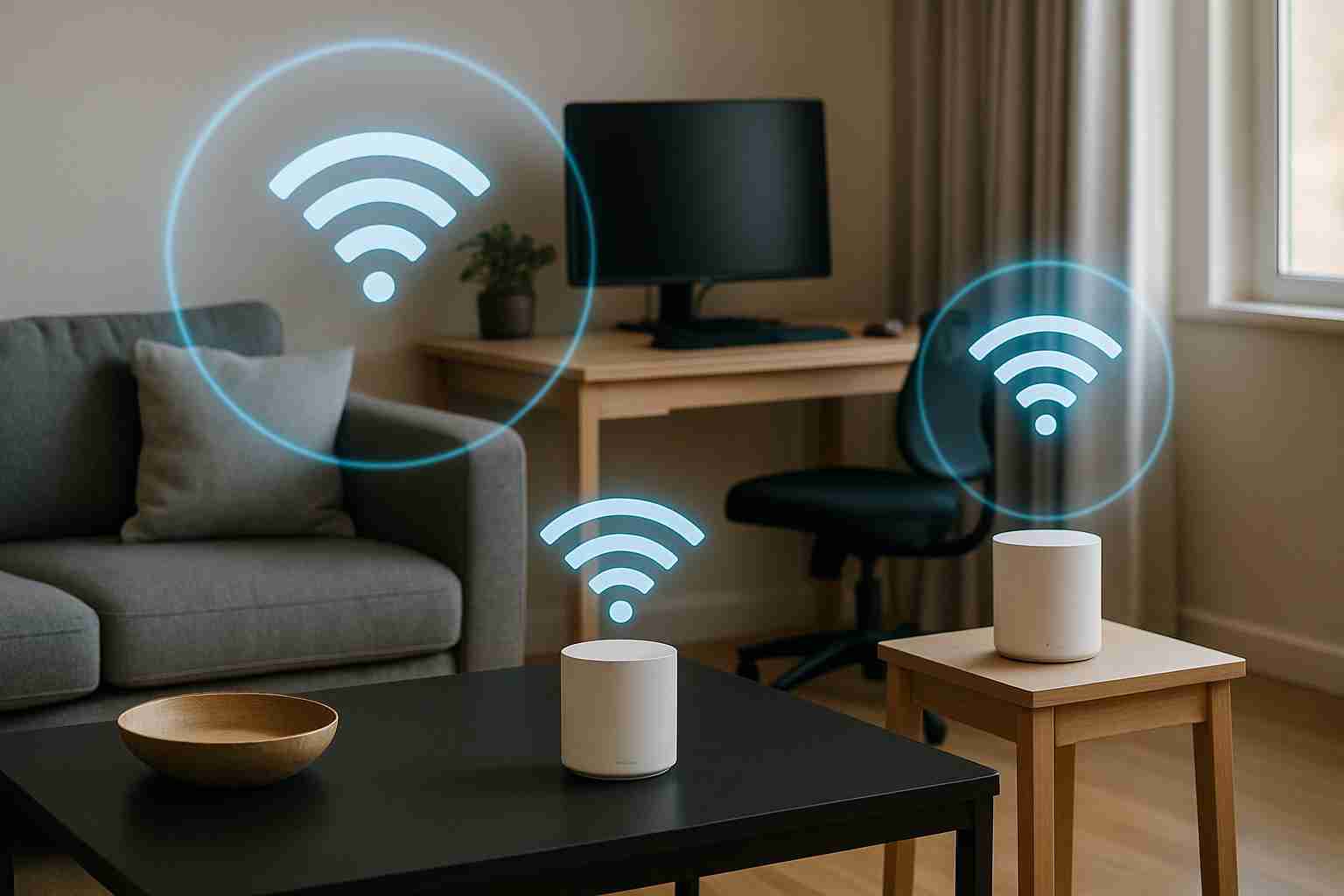
MeshCore is transforming communication by seamlessly integrating with LoRa technology to build resilient energy-efficient mesh networks. Visionary creators Scott Powell and Liam Cottle designed this cutting-edge platform, harnessing the core strengths of LoRa to function effectively in power-saving communication hardware and autonomous communication networks, environments where conventional systems often falter. These distributed networks enable communication in locations without dependable infrastructure. The MeshCore protocol enhances signal routes and uses intelligent routing techniques to guarantee data packets arrive accurately even if certain nodes fail or paths become blocked. Its intelligent self-healing network capability makes it ideal for critical scenarios demanding fail-proof operation.
By establishing a communication matrix that withstands harsh conditions, MeshCore provides vital connectivity to remote communities and decentralized Internet of Things platforms. Leveraging LoRa’s remarkable long-range IoT communication and penetration abilities, MeshCore lays a robust groundwork for sophisticated mesh networking, boosting reliability and coverage. With its distributed architecture, it ensures data privacy and security, cultivating user trust. The MeshCore protocol also paves the way for advancements in mesh networking, delivering a solid framework for creating secure and sustainable communication infrastructures in regions where legacy networks fail to operate.
Advantages of LoRa Mesh Networking
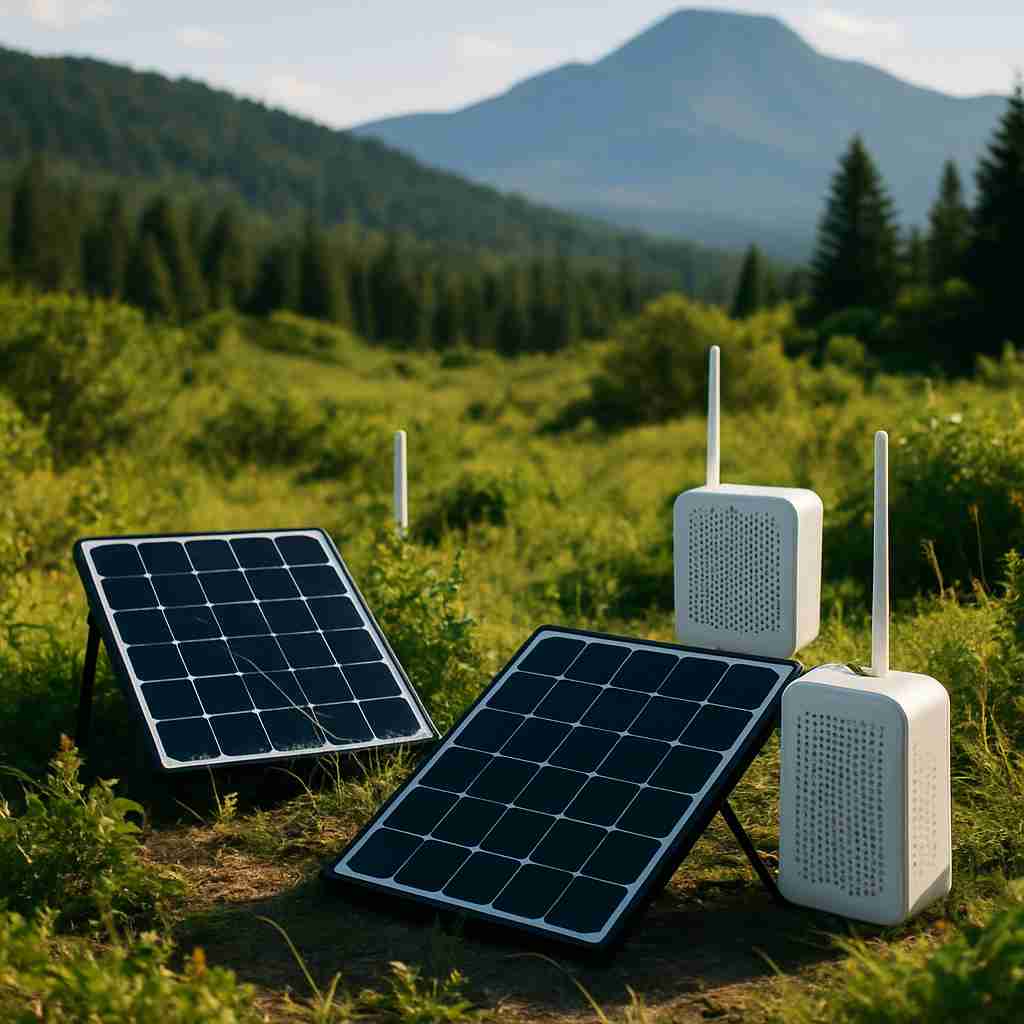
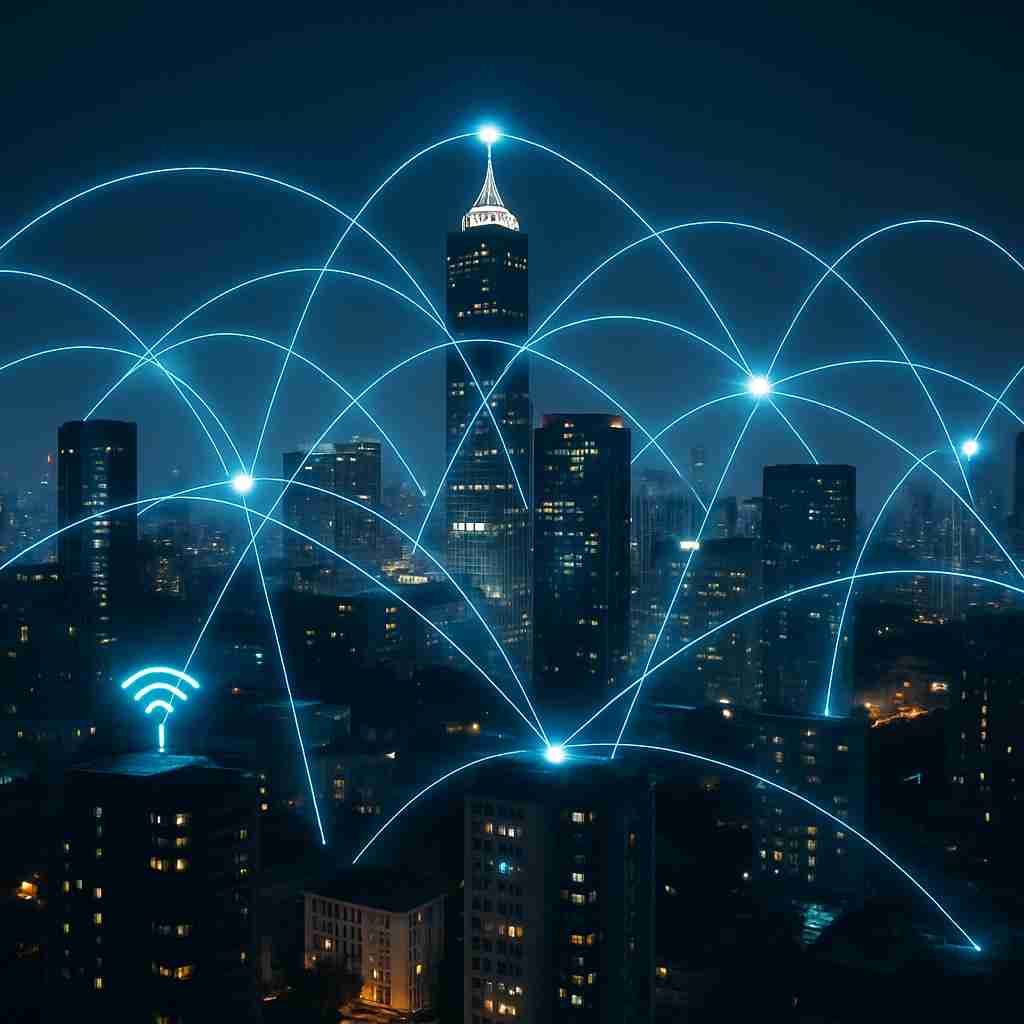
Particularly in settings where dependable grid access is scarce, LoRa mesh networking presents notable advantages. It stands out as a preferred option for rural and isolated regions because of its energy-efficient communication equipment. LoRa integrates effortlessly into broad networks, consuming very little power while delivering exceptional range and signal penetration—unlike conventional networks. This capability is possible due to its effective communication over vast distances, even through tough environments such as thick forests or rugged hills. Such features make it an excellent choice for IoT projects that require connectivity across large geographic zones. By adopting a decentralized communication standard, LoRa lowers reliance on central infrastructure, boosting the network’s durability against outages. Additionally, the integration with the MeshCore protocol greatly improves flexibility, supporting scalable networks that expand without significant infrastructure changes. This scalability is perfect for IoT developers seeking steady and expandable solutions for devices and sensors spread over extensive areas. Leveraging the MeshCore protocol, LoRa’s traits are utilized to form networks that not only span larger distances but can also penetrate city environments cluttered with obstacles, making it essential for enhancing rural connectivity and driving IoT advancement.
Off-Grid Communication Solutions
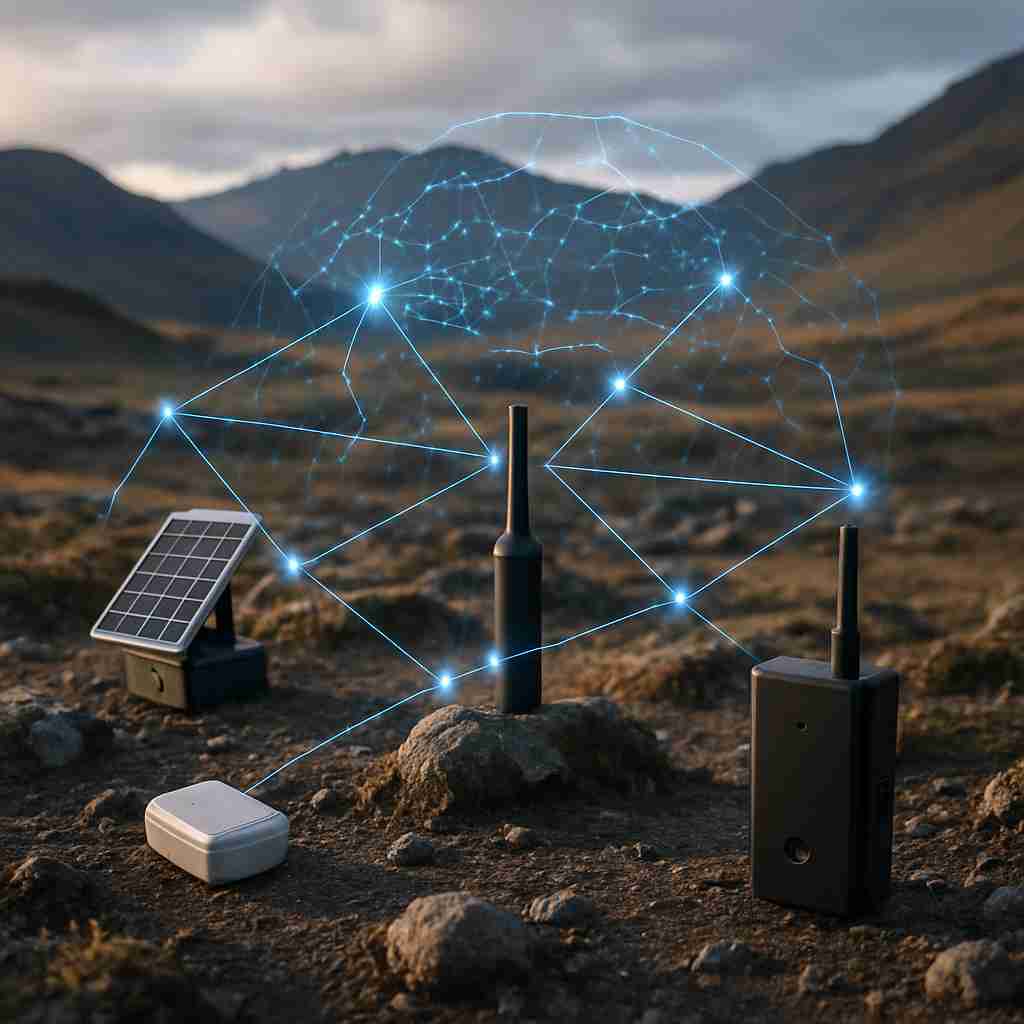
In regions where standard networks fail, autonomous communication technologies prove essential, adjusting perfectly to the needs of remote environments, disaster-impacted areas, and exploratory missions. LoRa mesh networks excel in such scenarios, creating strong communication links that don’t rely on existing infrastructure. The MeshCore protocol elevates these networks by providing unmatched resilience and robustness. Designed specifically for remote operations, it guarantees steady message transmission even in difficult terrain or unfavorable conditions. This flexibility renders it vital for emergency personnel, supporting live communication during crises where every moment matters.
Furthermore, these mesh networks excel at backing wilderness adventures where reliable, energy-saving communication devices are a must. Utilizing LoRa’s extended range, the MeshCore protocol ensures key information covers long distances with minimal power usage, which is critical for battery-powered gadgets in isolated settings. This breakthrough results in better connectivity far off the beaten track, enhancing not only safety but also technological access in previously unreachable areas. Such systems mark a major advancement, empowering both individuals and teams to stay connected effortlessly, no matter the location or situation.
The Role of Decentralized Messaging
Decentralized messaging serves as a vital foundation for safeguarding privacy and security in communication. By utilizing autonomous communication technologies that resist censorship and centralized oversight, protocols such as the MeshCore protocol grant users a degree of control seldom found in traditional networks. These distributed communication platforms empower users by offering messaging applications that function independently of central servers, inherently making them resistant to disruptions or shutdowns. When infrastructure failures or censorship attempts occur, such autonomous communication networks keep communication pathways strong. They achieve this by dispersing data across a network of nodes, ensuring message delivery even if portions of the system are compromised. This feature is especially valuable in areas governed by authoritarian regimes or facing geographical barriers where standard infrastructure is unreliable. Combining these technologies with energy-efficient communication equipment further boosts their dependability and reach. Hence, the MeshCore protocol and similar systems deliver a critical alternative to centralized messaging, strengthening the future of secure, independent, and uninterrupted communication worldwide.
End-to-End Encryption for Secure Communication
Within mesh networks powered by the MeshCore protocol, implementing end-to-end encryption guarantees that only the sender and recipient can access the messages, preserving confidentiality. By encrypting data exchanges, this method greatly boosts security and blocks unauthorized eavesdroppers or interceptors. Encryption proves vital, particularly in circumstances demanding secure information transfer, such as among first responders working in disaster zones or during sensitive military missions.
Embedding encryption practices into mesh networks strengthens their security architecture, providing reassurance to users. Yet, a delicate trade-off exists. Encryption requires computational power, which can impact the performance of low-energy transmission devices, especially those operating off-grid. Addressing this requires leveraging optimized cryptographic methods for mesh networking that efficiently safeguard data without exhausting the modest resources of these devices.
Ensuring this balance is imperative for practical deployments where dependability is non-negotiable. For example, rural telecommunications relying on the MeshCore protocol mandate both strong security and smooth operation. Moving forward, achieving harmony between these priorities continues to be a central challenge for developers to maintain secure yet effective communication networks.
Conclusions
As the demands for communication transform, integrating protocols such as the MeshCore platform and LoRa long-range communication technology alongside distributed cryptographic standards presents cutting-edge answers for isolated communication systems. These infrastructures cultivate robust, protected communication pathways, proving essential in regions where dependable infrastructure is scarce. By adopting these innovations, the call for power-saving communication hardware and distributed secure communication is met, laying a foundation for connectivity that is ready for the future.