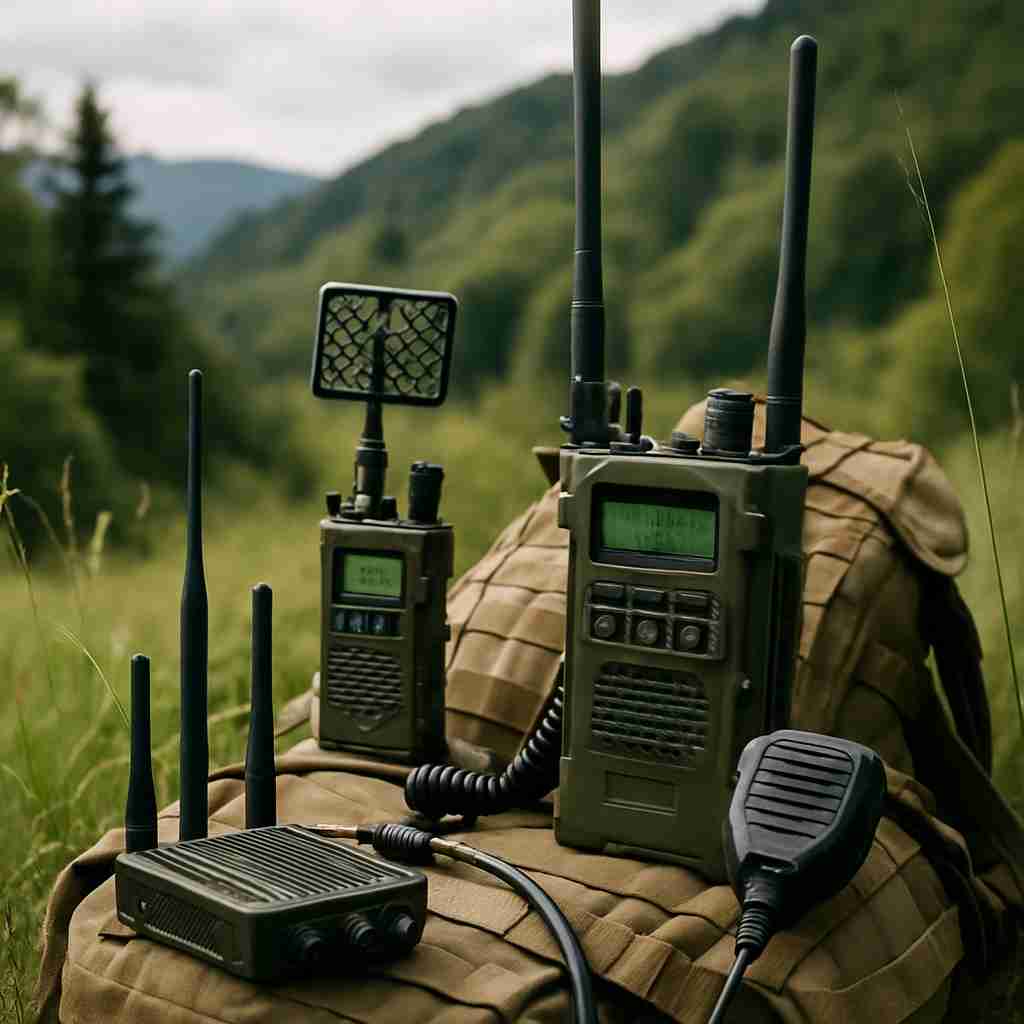
In today’s interconnected world, mesh networking radios are essential contributors to uninterrupted communication, whether on the battlefield or in isolated environments. This article explores the forefront of military-grade communication solutions and tactical mesh communication technology, unveiling innovative answers for consistent connectivity when timing is critical.
The Fundamentals of Mesh Networking
Mesh networking offers a groundbreaking method for connectivity by using numerous nodes to enable efficient data transfer. This distributed wireless network boosts reliability and adaptability, delivering significantly improved performance compared to conventional network arrangements. Since each node can connect autonomously to others, mesh networking radios prevent issues related to single points of failure. Various topologies exist, ranging from partial to full mesh, providing varying degrees of robustness and redundancy. Such versatility is especially beneficial for expansive, intricate deployments.
Wireless mesh networks form a critical foundation, powering applications in intelligent urban communication systems, crisis response, and remote operations. In civilian environments, they facilitate smooth IoT integration and support smart grids, thereby improving urban infrastructure and energy management. Defense mesh network implementations are widespread, guaranteeing communication in difficult terrains where traditional networks fail. Emerging standards like Bluetooth Mesh and Thread continue to broaden horizons, enhancing IoT ecosystems by enabling vast device interconnectivity.
These developments highlight the adaptability and accuracy of mesh networking radios. They represent unmatched capability in tactical and autonomous communication scenarios, further establishing their essential role in today’s communication landscape.
Tactical Communication Devices: Taking Connectivity to the Next Level
The field of strategic communication systems is constantly progressing, fueled by the demand for protected and dependable links in harsh conditions. Exemplary of this progress are devices such as the E-LynX and ATAK systems, which play crucial roles in military operations. Their importance lies in transmitting encrypted tactical communication that forms the backbone of mission success. Voice and data transfers are protected by these systems, which leverage state-of-the-art technologies and conform rigorously to MIL-STD-188 certified communication radios standards, ensuring durability and compatibility in defense communication systems.
Incorporating these advanced solutions into military maneuvers not only aids combatants on the ground but also boosts their protection. By delivering seamless and secure mesh networking radios, these tools enable instantaneous battlefield communication, fostering improved situational grasp during operations. This effect is especially crucial in contemporary tactical missions, where swift and trustworthy communication frequently determines the outcome.
Essential to effective military strategies, these mission-critical communication networks form the infrastructure that keeps forces connected amid fluctuating circumstances. The innovation embedded within mesh networking radios highlights their vital function in supporting and securing military personnel.
Off-Grid Mesh Radios: Staying Connected in Remote Locations
Maintaining connection in isolated areas often poses a significant challenge. Innovative solutions like off-grid mesh networking radios, including LoRa-based MeshCore and Meshtastic, ensure communication remains intact without relying on conventional infrastructure. These standalone communication devices are essential in emergency scenarios, outdoor explorations, and expanding rural internet access, particularly where cellular signals are unreliable.
Employing LoRa wireless mesh system technology, MeshCore and Meshtastic deliver low-energy, long-distance communication over broad regions. Their sophisticated features guarantee dependable links among users spaced miles apart, proving crucial in crises when standard networks fail. During search and rescue missions, these remote communication tools provide uninterrupted coordination and safety among teams.
Outdoor adventurers find these independent communication systems invaluable, as they support dependable contact even in the most remote environments. Whether hiking, mountain biking, or camping, users benefit from extended reach and power efficiency, keeping the group connected across isolated trails.
Furthermore, in sparsely populated regions, these mesh networking radios enable the creation of rural wireless internet solutions where traditional services are insufficient. By harnessing the affordability and durability of these devices, remote communities secure vital connectivity, effectively bridging the digital gap.
MANET Radios: Revolutionizing Mobile Networking
Mobile Ad Hoc Networks (MANET) play a crucial role in situations where mesh networking radios demonstrate their strength, owing to their adaptive, distributed wireless networks design. Their ability to accommodate frequent shifts in network layout without needing centralized systems makes these radios highly effective. This adaptability is essential for defense mesh network applications and disaster recovery communication tools, where rapid setup and dependable performance are vital.
Within a MANET, each radio functions simultaneously as a router and a node, working together to relay information. This interconnected framework guarantees that the network can reroute data if a particular link goes down, preserving connectivity. Such autonomous network recovery technology is indispensable in volatile conditions, delivering a level of resilience unmatched by conventional networks.
Typically, MANET radios operate over UHF/VHF radio signal communications, facilitating stable transmissions across diverse landscapes. This flexibility is particularly valuable for military-grade communication solutions that require secure and reliable links during field missions. In emergency scenarios, these networks provide vital links when current infrastructure fails, making sure that responders and coordinators stay connected.
The impact of mesh networking radios on innovations in MANETs highlights their capacity to change connectivity strategies in demanding environments, preserving critical communications despite external interruptions.
Innovative Mesh Networking Solutions and Future Trends
As the globe shifts towards uninterrupted connectivity, mesh networking radios lead this transformation. Today’s breakthroughs combine AI and machine learning to enhance the flexibility and performance of these networks. This fusion of advanced technology with adaptive algorithms empowers systems to manage network traffic dynamically, foresee potential failures, and optimize communication routes instantaneously.
Looking ahead, intelligent networks are expected to progress further by independently handling massive data volumes. Yet, along with such progress, mesh networking radios encounter challenges including security risks and scaling complexities. Security frameworks must evolve to better defend against breaches and unauthorized access. Approaches like distributed security frameworks present promising solutions to reinforce network protection.
Scalability remains a key obstacle, especially as demand surges dramatically. Modular mesh network frameworks may offer the answer by enabling seamless expansion without unnecessary duplication. The future holds substantial advancements, positioning this technology as a crucial component in worldwide connectivity, bridging urban centers and remote locations with unmatched reliability and efficiency.
Conclusions
Mesh networking, utilizing its strategic communication systems alongside independent communication equipment, provides a resilient foundation for maintaining dependable communication in diverse settings. Its versatility, security, and effectiveness in forming networks without centralized failure points render it essential in both defense and civilian contexts. As advancements in technology continue, mesh networks are set to become a cornerstone in global communication solutions, addressing the constantly changing demands for connectivity.