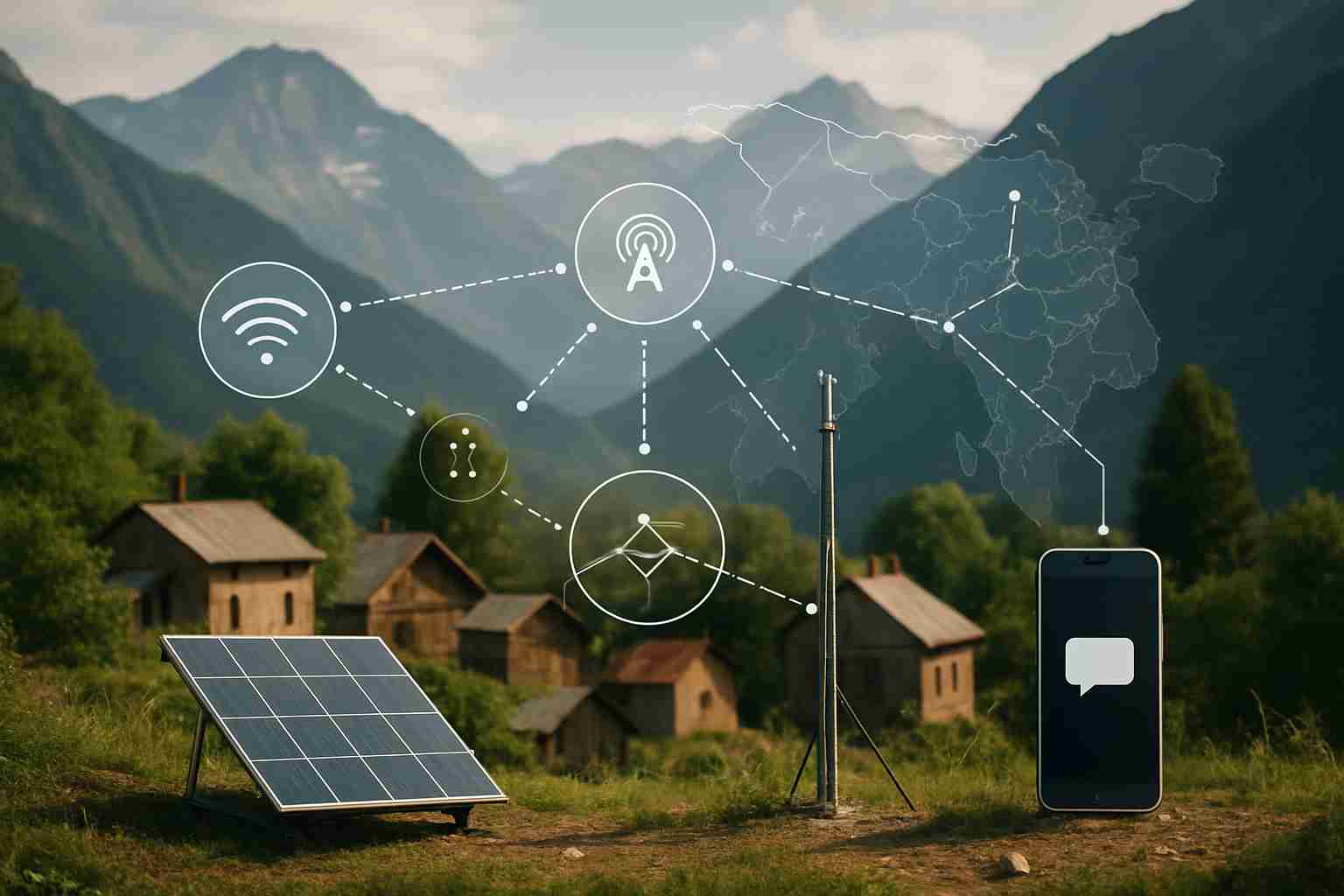
In this modern digital era, having reliable communication solutions is crucial, particularly in remote or crisis situations. MeshCore, a LoRa mesh communication protocol, combined with distributed communication networks and open-source networking protocols, is instrumental in transforming autonomous communication solutions. This article explores these innovative technologies, their capabilities, and practical uses.
What is MeshCore?
At the core of autonomous communication solutions for remote locations lies MeshCore, a protocol designed to maintain connectivity when conventional networks fall short. Utilizing LoRa wireless mesh technology, it delivers a mesh networking approach tailored for low-energy communication solutions, making it ideal for environments where power conservation is essential. By implementing defined routing roles alongside multi-hop LoRa transmission, the system can pass messages through several nodes until they reach their target, no matter the terrain or distance.
Created by Scott Powell and Liam Cottle in 2024, MeshCore distinguishes itself with its emphasis on extensive scalability and a distributed communication network design. This breakthrough enables communication infrastructures to self-organize and adapt fluidly to changes in network composition, proving especially valuable during emergencies or natural disasters. The protocol’s role-based structure enhances information flow, minimizing network clogging and guaranteeing smooth data transfer.
During crises like floods or earthquakes where communication infrastructure frequently fails, MeshCore delivers vital connectivity. This dependable communication lifeline supports both emergency responders and affected populations, facilitating coordinated responses and accelerating disaster relief. Consequently, MeshCore goes beyond merely linking devices—it unites people in critical moments, ensuring uninterrupted information exchange even under the harshest conditions.
The Role of LoRa in Mesh Networking
LoRa technology stands out as a key player in mesh networking, offering an efficient method to link low-energy devices effortlessly across expansive distances. Thanks to its impressive long-distance reach and power-saving communication networks design, LoRa plays an essential role in IoT communication platforms like smart farming and remote surveillance. In such scenarios, ensuring a consistent, low-energy connection over broad regions is vital, and LoRa addresses these needs with ease. What sets LoRa apart is its ability to improve mesh networking protocols such as MeshCore and Meshtastic. These protocols depend on LoRa’s capacity to manage structured routing functions and perform multi-hop LoRa networking, guaranteeing that data packets move effectively through varied landscapes, even where conventional infrastructure is absent.
The collaboration between LoRa and mesh protocols not only facilitates autonomous mesh communication but also boosts durability in tough environments, including post-natural disaster scenarios. By enabling devices to communicate via LoRa mesh communication networks, platforms like MeshCore deliver a reliable structure for preserving communication when it is most crucial. This represents a move towards self-sufficient connectivity solutions that emphasize both practicality and adaptability in unpredictable settings.
Decentralized Messaging Solutions
By fully tapping into the advantages of distributed communication networks, MeshCore has transformed the way communication happens without relying on conventional or centralized frameworks. Avoiding central servers, MeshCore boosts privacy and autonomy, which are crucial in scenarios requiring strong security, such as demonstrations or natural calamities. Innovations like Matrix and BitChat drive this shift by providing encrypted, peer-to-peer communication. Their durability guarantees ongoing connectivity even when standard networks fail.
As a decentralized system, these platforms reduce threats linked to central data compromises. Matrix enables users to control their own servers, promoting decentralized governance over interactions. BitChat heightens privacy further through blockchain-based secure chat, blocking unauthorized interference and manipulation. These features surpass conventional messaging systems, which depend on vulnerable central nodes and frequently expose metadata to external surveillance.
Nonetheless, despite excelling in privacy and robustness, these decentralized chat applications encounter obstacles, including slower adoption rates and compatibility hurdles with existing tools. Still, their potential for secure and self-reliant communication renders them essential in the evolving communications environment today.
Encrypted Off-Grid Communication
Securing communication in remote communication systems is essential for safe off-grid messaging. Solutions like MeshCore employ encryption to guarantee both confidentiality and message integrity. Overcoming the constraints posed by limited data rates on low-energy wide-area networks such as LoRa presents significant challenges. Nevertheless, encryption approaches like elliptic curve cryptographic LoRa solutions and symmetric encryption are commonly leveraged to enhance performance without weakening security.
For maintaining secure exchanges, it’s best to adopt efficient encryption schemes that reduce data payloads and to implement key exchange processes that resist interception effectively. These techniques enable protected messaging even when bandwidth is restricted.
In practical applications, technologies akin to MeshCore have supported communication in disaster-affected regions, ensuring sensitive data like GPS locations and private messages stay shielded from unauthorized access. By preserving data privacy and message secrecy, such tools fortify user protection against external threats and enable secure communication when conventional networks are down. This robustness plays a crucial role in building trust and dependability within autonomous communication solutions.
Future of Open-Source Mesh Protocols
Open-source mesh networking like MeshCore is set to transform autonomous communication solutions by offering remarkable flexibility and scalability. The strength of public communication protocols lies in the collaborative efforts of the global developer community, which continuously enhances and innovates these networks. Among the core developments is the rise of distributed communication networks that boost the reliability of data exchange by removing single points of failure—a vital aspect for isolated or underserved regions. Imagine communities crafting custom networks perfectly suited to their landscapes and specific demands, fostering local self-reliance.
New advancements are concentrating on bolstering security, increasing mesh stability, and minimizing delays even when bandwidth is limited. These adjustments may enable real-time data transfers, which are essential for crisis communication systems, ensuring uninterrupted information flow where conventional infrastructure breaks down. By lowering access barriers, open-source platforms attract fresh insights and speed up progress. This democratization broadens the reach of remote communication systems, allowing them to expand into markets previously out of reach due to pricing or complexity.
Eventually, solutions like MeshCore will facilitate seamless communication diversity, closing digital divides and boosting connectivity in places typically beyond internet reach. As these technologies evolve, their worldwide influence could revolutionize communication landscapes across the globe.
Conclusions
MeshCore and similar mesh networking innovations represent a significant advancement in remote communication systems, particularly for isolated locations and urgent situations. Their publicly accessible frameworks, use of a LoRa mesh communication network, and secure messaging applications boost both security and connectivity. As these open communication standards continue to develop, they are set to redefine how communication is managed in areas lacking conventional infrastructure, underscoring their crucial importance in today’s digital world.